Showing posts with label 3rd. Show all posts

Sunday, July 6, 2014

This year in 3rd grade

I had a great time with my 3rd graders this year. They have art first thing in the morning, and it's such a great time of day for focused creativity. They are also a good group of kids who haven't lost their sense of curiosity. I'm also generally pleased with the scope of projects we did together and how successful the kids were in each media.
So here's what we did in 3rd grade art this year:
We learned about symmetry. We practiced cutting and collage skills, and created a mask-like monster using the letters of our names to create unique shapes.
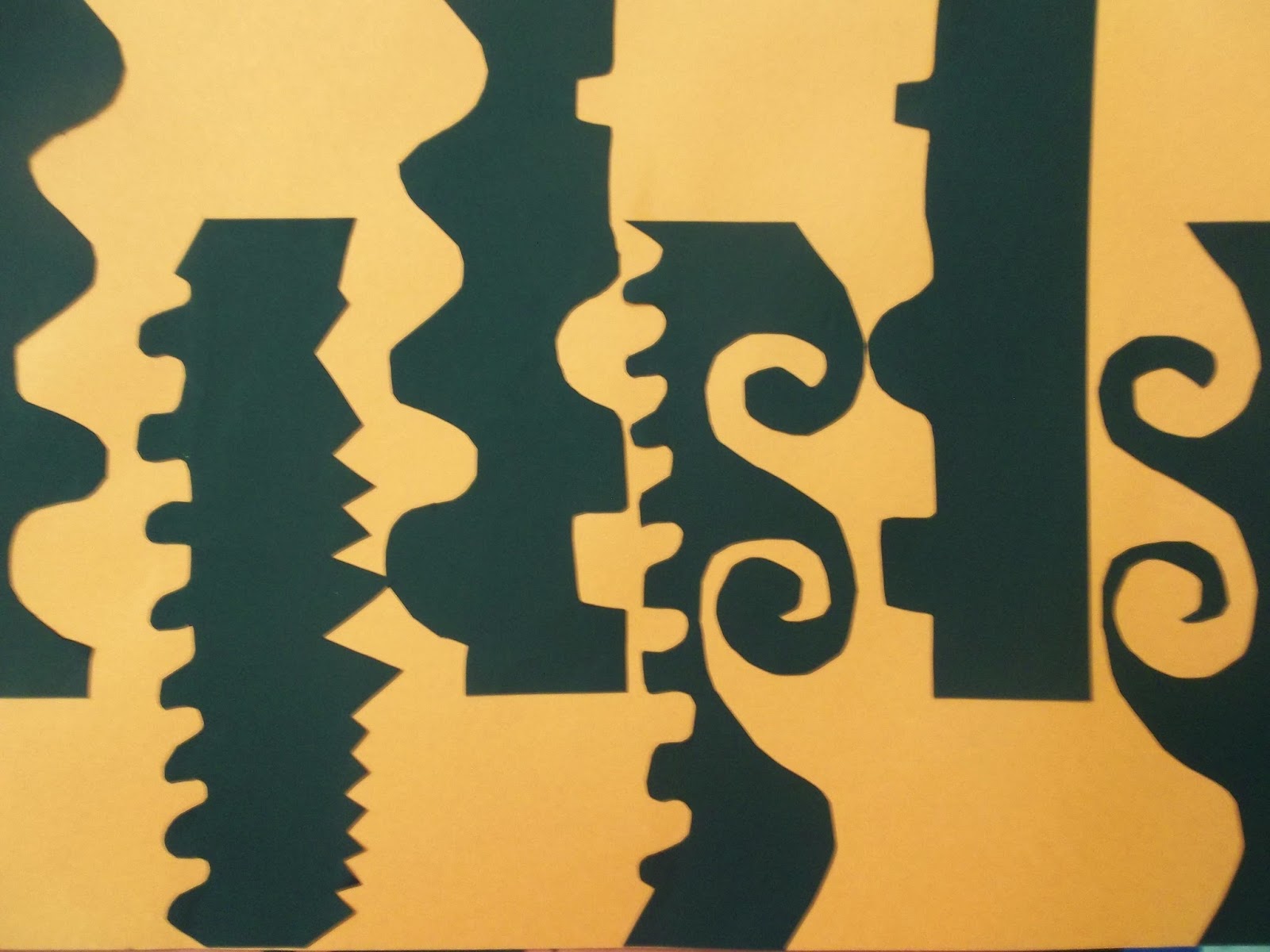
 We learned about different types of lines and about negative and positive space. However our cutting skills were not as advanced as our line-drawing skills, and many of the kids struggled with this project. Although the results look interesting, there was not enough content to the imagery in this project to engage the kids well. This needs to be adapted for next year.
 We learned how to create a sense of movement in a picture by using lines. This was a great one day project.
 We learned about self-portraits and how artists express emotions through expression and emotional color. Although I love this project, and it as an improvement over last year's "conversation" portrait project, I feel like I'm missing something. The kids take so long to paint it! But I think painting a smaller picture would be difficult too. Invariably they struggle with noses too...
We learned about how to create a sense of space in a picture through warm and cool color, scale, overlap, and placement on the picture plane. This year we made our own scratchart and then drew an outer space landscape. But I miss the variety of the pop-up landscapes I did last year. I might switch the scratchart project to an abstract project instead. It would also work on positive and negative space.

 We learned about complementary colors, tints, and shades and ho to blend oil pastels. We also learned about the still-life genre and drew healthy and unhealthy things.Finally we used mosaic squares to make a patterned border. I love how these turned out, but I think I would go smaller next year. One kid who missed several classes did just as good a job on a smaller piece of paper and was able to complete the border in half the time. The border really took way too long, and since the kids generally draw small anyway, their still-life objects were lost in a sea of negative space.
 We learned about Gyotaku fish printing from Japan. We learned how to make a relief print from an object, but also by drawing into styrofoam. These were beautiful and the kids really enjoyed printing.
 The last quarter was dedicated to craft. We learned about traditional American embroidery samplers by school-age children in the 18th century. We learned how to stitch running and whip stitches and how to sew on a button. This was many students' favorite project of the year.
 We learned how to create a coiled vessel in clay. We saw both traditional and contemporary craftspeople have used this form in their work. We also made a painting in response to the completed bowls to "camouflage" it.
I'm excited to work with 3rd grade again next year. One of the teachers asked me to integrate with their science curriculum and create a project that uses "simple machines". I love to integrate with other core curriculum and collaborate with my colleagues!

Thursday, June 19, 2014

Exemplars and thinking back

Wow! So.. um.. where did that year go? I have been on summer vacation for one week after completing my second year of (almost) full time art teaching. It's a good time for reflection.
As I tidied and packed up my room that last week I pulled out all the exemplars that had been piling up in a drawer over the year, sorted them out by grade level and took a pic (with my blurry cell phone camera sadly). These show only the 2D work we did- all 3D work went home with kids and I don't have room for saving my 3D exemplars... Most of these are unfinished, as I rarely display a completed exemplar- usually only works in progress because I like to use them as prompts to see if the kids remember what the objectives are. Like, "Mine's not done yet is it? What should I do to it?" And I think the kids are more creative when they see something a little open-ended or see multiple possibilities.
Kinder
 I cannot believe how many projects we did in Kinder this year!! Almost twice as many as any other grade level. I like to keep things short and sweet with the little ones because they have such a short attention span. The kids' favorite ones were painting rainbows, drawing fireworks, and making "wild things". The teachers' faves were their self-portraits in the snow and their cherry blossom trees and origami butterflies. My favorite was pattern Elmer elephants and Wild things. I never want to do bleeding tissue paper watercolor effects ever again.
First
 My first graders were also prolific (despite their constant chatter and my doubts that they ever listened to directions....). The kids' favorites were the scarab beetle sculpture and puppet theatres. The schoolwide favorites were the family portraits and Australian animals. My favorites were the "Dot" paintings and the bug jars (although they seriously freaked out our receptionist who had to stare at a display of them across from her desk for a few weeks- and I had numerous requests to switch out to something else!!). The city collage was a flop, because their scissor and glue skills were not yet developed enough for it.
2nd
 My second graders are another chatty group, and we did not get quite as much done as I'd like, but there were some good things. The kids LOVE the Oaxacan wood carvings(not shown) and predator/prey drawings, and so did I. We started and ended the year well, but the middle part was sluggish. The value landscape was a total flop and the self-portrait reading a book was just too long. Part of the problem was all our snow days.... but I'll be revamping a lot of things in my second grade for next year.
Third grade
 I loved, loved, loved my third grade classes this year. I always see them first thing in the morning, when they are fresh and eager to start their day. I had a very creative bunch who worked very hard to do well. I think all our projects were pretty good, but the kids absolutely loved sewing and making clay coil pots(not shown). Although I loved their food oil pastels with mosaic border, the mosaics took too long. The school loved seeing their Gyotaku fish prints.
4th
 Oh 4th and 5th graders. What a disappointment.. I have a lot of work to do to figure out how to get you all more productive. Maybe we should just have silent art.... The 4th graders seemed most engaged with their impressionist landscapes and US maps/states project. I really liked their figure motion drawings and metal toolings. I did not like rotating 4 classes through papier mache projects over 3 months. I have so little space for storing sculpture. I think that papier mache gargoyle project has to go!
5th
And 5th grade. Is it me? Is it you? We never even got to make ANY sculpture this year. Definitely revamping the 4th and 5th grade curriculum. Maybe you all need to work smaller too. This might not be a fair representation though, there's at least 2 projects missing from the above photo, but still. I've got my work cut out for me.
 I'll do another reflection post with kids' art later on. But laying out exemplars was a great way to get the big picture of what each grade accomplished. Having these pictures will also help me as I plan next year and decide what to keep or toss or modify to make sure my kids are getting a quality art experience. Year 3 will be even better, I'm sure.
Is reflection part of your end-of-the-year ritual?

Sunday, January 12, 2014

Can you feel the emotion?

 How are you feeling today? I'm feeling pretty proud of my 3rd graders. Right before Winter break we were able to finish our "Emotional Self portraits". I just got around to photographing and sharing these on Artsonia, where you can read their artist statements as well.
 Most of my students did happy faces, but there were a lot of surprised ones too (it's fun to draw surprise), and a few did bored or tired. Whatever emotion they were trying to show, they had to show through facial expression and through their choice of background color.
 We were using the Biggie Tempera cakes for the first time. I had them mix colors right on the paper or on the lids to the trays. Last year I had jars of tempera in boxes on the tables and the kids used popscicle sticks to dole out paint onto a palette and mix. But distribution was such a hassle, and many kids spent more time mixing colors than actually painting. Or they wouldn't ever mix enough. I think the Biggie Tempera was much easier to distribute and use, although the mixing issue was still a slight problem, and many kids were too impatient to let things dry before painting next to an area, and they had colors bleed. It shared issues normally seen in watercolor painting. Overall, the portraits look slightly sloppy, but perhaps I'm just putting adult aesthetics inappropriately on viewing kid paintings... The ones I'm sharing here now are the best from each class. I do have some very careful painters. I wonder how the 4th graders would compare...
 These 2, above and below, I find the most expressive and imaginative. The glasses on the one above make it look so much like the child who painted it- it's oddly the most realistic of the group despite the rough painting. And the one below was a feat of creativity, for unhappy with the way he painted his eyes, he decided to paint a scuba mask on the face and turned it into a diver afraid of an oncoming shark!!
 The half-closed eyes and purply colors make this one soooooo sleepy:
 This one had a funny story about feeling sneaky because he was spying on his sister:
 And apparently this individual has anger issues (I'm not kidding, he actually wrote that in his artist statement!):
 I'm fascinated with their honesty in 3rd grade. They share their thoughts and feeling uninhibitedly. I'm glad they feel art class is a safe place for that and that our projects give them an opportunity for self-expression.
 Last year I had third grade do conversations portraits showing themselves talking with a friend, but this year the kids seemed more invested in just painting their own large self-portrait.
 This Philly's hat and Call ofDuty shirt give me an idea for next year... clothes and accessories make a big difference in showing who you are and what you are interested in. We'll have to try emphasizing that next time.
I wish I could post all of them, but really I already did on Artsonia. Go check out the rest, and feel free to leave a comment for my students!

Wednesday, November 6, 2013

Speedy 3rd graders

 I might chalk this one up as BEST PROJECT EVER. We compared 2 abstract paintings (both entitled "SPEED" to identify ways artists create movement with line and direction. Then we brainstormed "FAST" things. Students had to draw, cut out, and glue down a fast object in silhouette, and then use line variety to create a sense of movement across the page. We compared the idea to the contrail a plane makes as it crosses the sky.
 We had lots of birds (like my exemplar), many rockets, some vehicles like cars and jet skis, some fish and lions, and even a tornado or two!
 Best of all, we managed to get through a lesson from intro to completed project in one class period, and it reinforced the line quality we'd just completed studying while introducing movement. No, BEST of all was how super engaged everybody was. The brainstorm of FAST things helped everybody find an idea, and it had plenty of room for creative interpretation. The only trouble was with 2 or 3 kids who weren't confident in being able to draw or cut out their objects.
I love how exciting these look! I asked kids to just write me a note about what they made (in case I couldn't tell a bird from a plane). The surprise ending was seeing how many kids wrote more than a note, since they are getting used to the expectation of writing about their art. WIN!

Wednesday, October 30, 2013

BOO! 3rd grade does positive and negative

Positive and negative space is a new concept for my 3rd graders. Inspired by a local cut paper artist, I thought this project would be a simple 1-2 class project. We first reviewed line quality and "Stole a line" from a series of images in a powerpoint (kids drew on whiteboards building a composition with lines they saw in the images). We practiced ruler skills and measured out 2 inch marks at the top and bottom of our papers, then connected the dots across the page with various types of line. So far so good.
But whoah! Was I not prepared for the low scissor skills of this group of 3rd graders. Did we never pick up a pair of scissors in 2nd grade???? Students had a real challenge following the lines they drew with the scissors to cut them out. Of course, some had drawn amazingly detailed, fussy lines that any adult might find a challenge to cut out. I even had some kids break down and nearly give up because they felt they weren't good with scissors. Magic art teacher to the rescue! There was a box of special scissors (loop scissors that all you have to do is squeeze ad they spring back open) that I NEVER pulled out last year, but they are wonderful for some of my special needs kids with OT issues. Of course, everyone wants special scissors...
 Once the strips were cut apart they were arranged on contrasting colored paper (kids chose their color), leaving some negative space in between the strips to make new shape lines. Gluing is another challenge...
It was perhaps not the most exciting project ever, but it brought to light some interesting skills issues. The challenge level was huge for some of my students- but maybe that's why this was a good lesson for them. It took some ids 3 entire 50 minute class periods to finish! Others did an amazing job of careful cutting, arranging, and gluing and finished in one and a half classes! Go figure.
With the odd rate of completion on this project I had a bunch of kids who needed a new activity. This being Halloween week, I let them have a "freebie"- a project I would not grade and that was just for fun that they could take home immediately. It was not REALLY just for fun though- it was a super extension of positive and negative space by creating stencils!
Kids cut out a "spooky shape" from scrap paper, placed it on black paper and brushed white or orange color stick from the center outwards. I have no chalk- it would have been easier I think.  After stenciling they went back in and added details as well as a "spooky message".
 Kids were encouraged to share stencils, and some discovered that both pieces of cut paper (positive and negative) could be used to shade either the exterior or the interior of the cut shape.
 This was an excellent, quick, high-engagement lesson... mostly due to my kids thorough obsession with all things Halloween. I'm not a big fan of Holiday art in art class- the classroom teachers do holiday crafts with them, so I don't feel it's necessary. But it does get kids engaged.
 Happy Halloween everybody!

Saturday, March 30, 2013

3rd grade conversations

 This project took up most of 3rd quarter for the 3rd grade! We learned about portraiture and self-portraiture. We looked at Georges Rouault's portraiture for color and at Norman Rockwell's "Gossips" painting for the idea of a conversation. Talking is a problem I have with 3rd grade- tattling and noise!!! So this project idea is a little tongue in cheek for me. (If you want to talk so much, show me who you talk to and how you feel!)
 Although I stressed proportion in drawing the facial features, not everybody "got it", especially in contrasting the profile and the full view for their talkers and listeners. They did, however, really get the idea of emotions, and their painting are quite expressive. They made interesting facial expressions, and used expressive colors in the background to emphasize emotion.
We also talked about how to mix tints and shades, and they did a great job mixing facial tones. On our last day before Spring break, students went back and re-outlined the boundaries between colors and used oil pastel to cover up any unfinished areas. This project finally wraps up our study of genre! Next we'll be moving on to our trip around the world with art.

Saturday, February 23, 2013

3rd grade Pop-up Landscapes

3rd grade has just completed their landscape genre project which focused on background, middleground, and foreground. To make understanding of the different spaces very literal, I thought it would be fun to physically separate them and make a pop-up landscape. We started with a map to cover a foundation piece of chipboard, and used the roads and boundaries within the map to inspire a horizon line for the background of a landscape. Students then created a middleground layer from construction paper, and then foreground elements. To emphasize a sense of space, students were encouraged to draw things tiny in the background and large in the foreground. They were also challenged to make something happen in their landscapes like Grant Wood did in "The Midnight Ride of Paul Revere", one of the paintings we looked at for inspiration.
 We had a paper spring folding contest before assembling the layers. Photos don't really do justice to these pieces, because it flattens them out. In reality, these images really pop-out, and the small foreground pieces even quiver in the air currents or when jostled. Students had a choice of what kind of landscape to create. My original example showed a mountainscape, and so it was a popular choice. Although the range of animals included bears, rabbits, wolves, squirrels, and even monkeys.
 Seascapes were another very popular choice- probably because many of my students enjoy going down to the Jersey shore in the summer, and it's familiar. I can just imagine Ocean City in the boardwalk scene below, which includes a ferris wheel and cotton candy vendor. 
Another favorite landscape was the EXPLODING VOLCANO. About half my boys did a version like this, many of which included screaming villagers fleeing from the lava. (Could it be that they remember my Pompeii story from when we did mosaics? Dream on Art teacher)

At the end of the lesson I gave students a sheet of lined paper and some sentence starters on the board so that they could write a description. They had to give a big idea sentence: "My picture is about...." . Then supporting detail sentences: "In the background,....", "In the middleground,...", and "In the foreground,..." Finally they could conclude with an opinion about the project: "I thought this project....."
After writing, they glued the papers to the back of the project. I really like having them write about their work. It gives them extra writing practice and an opportunity to express themselves in multiple ways. Although they groan and protest ("But this is ART class!"), I tell them artists have to write ALL THE TIME and to get used to it. It was also one more way for me to assess their understanding of the key concepts of space and landscape. This lesson is definitely a keeper- all the other classes in higher and lower grades kept asking when they would get to do it!

Wednesday, January 16, 2013

3rd grade food mosaics

The quarter is rapidly coming to a close and there is a stack of art a mile high on my desk. I've been grading and photographing like crazy. One of these days I may even get some up on the wall in the halls!  The major project for third grade this past quarter was a food-inspired paper mosaic. It was supposed to be done in time for Thanksgiving, but the project took much longer than I expected. Next year I should just do a mosaic pattern on a smaller piece of paper I think.
Everyone started with a patterned border 2 squares thick. Then they drew a fruit or vegetable inside the frame and filled up the space with the paper mosaic chips. When a box crossed a color section they could cut the chips vertically, horizontally, or diagonally to fit in. The kids did a great job and were really meticulous about finding the right color, cutting and gluing them down.
The number one most popular color was turquoise, which meant that as we neared the end of the project and resources dwindled I had some disappointed kids. The paper mosaic chips are really a great material, though- they are double-sided color, slightly shiny, card-stock weight cut into perfect little squares. It was a lucky find in my closets leftover from the previous art teacher, but I'll be sure to get them again.

Tuesday, November 27, 2012

Collaborations and Displays

I'm a big fan of collaborative art-making as well as the visual of lots of little things making a big thing. So here are 3 ways I've incorporated those ideas in projects my students have made recently.
 My first graders learned about texture and the parts of a tree. They traced their hand and arm to make a branch, filled it with bark texture by using line variety. Then they did leaf rubbings to use the texture of a leaf to make a rubbing-print. The leaves were cut into an organic shape and added to their "tree branch". Once all 4 classes were complete, I combined all their branches into a huge tree overarching the doorway. I wish I could paint on the ground and add the root system too! All their little pieces added up to an impressive display (note to self- don't use poster putty on the glass in the winter- too cold and it doesn't work!!- this all fell down because of a big temperature drop the day after I put it up, but scotch tape to the rescue).
 The 3rd graders' pattern fish we made a while ago were arranged down the stairwell into what looks like a big fish chasing a little fish. One of the 3rd grade teachers said, "Great! We're just talking about predator and prey in science!" While this wasn't specifically a collaborative project, having a creative way to display the work transforms it into something even more interesting.
The art club finished their "Dale Chihuly" inspired "chandelier" by combining all the tissue-paper papier-mached "snakes" into one splayed mass. I hung it in the stairwell, and have heard all kinds of comments. Usually it's, "WHAT is THAT?!" The only trouble with this kind of collaborative work is that the individual pieces can't be redistributed back to the students to take home.

I think collaboration is a vital part of learning about art. Students feel more connected as a class because they are working toward a greater goal. Every person's contribution is valuable. Contemporary artists often work in a collaborative mode, and therefore students get to experience working methods of artists today in an authentic way. As a teaching artist, I also feel that my own artistic voice is expressed with that of the children, which is very fulfilling.